
International peer-reviewed open-access journal
Eurasian Journal of Academic Research
A multidisciplinary scholarly journal by Innovative Academy RSC: rigorous editorial screening, DOI-registered articles, and open access for authors and readers worldwide.
About the Journal
Eurasian Journal of Academic Research is an international scholarly journal dedicated to the advancement of science, innovation, and contemporary research. The journal aims to foster academic collaboration across the Eurasian region and beyond, providing a platform for the dissemination of cutting-edge research findings to the global scientific community.
The journal covers a broad range of disciplines, including natural sciences, social sciences and humanities, engineering and technology, economics and management, education, information technology, and other emerging fields of research. It focuses on publishing high-quality, original, and impactful research articles.
The editorial board comprises distinguished international scholars and experts. All submitted manuscripts undergo a rigorous double-blind peer review process to ensure the highest standards of academic integrity and quality.
The primary mission of the journal is to promote the exchange of scientific knowledge, support early-career researchers, and contribute to the development of innovative ideas within the global academic ecosystem.

Mamatqulov Zuxridin Urmonovich
Vice-Rector for Academic Affairs, Tashkent Pharmaceutical Institute, DSc
Full editorial board →Current Issue
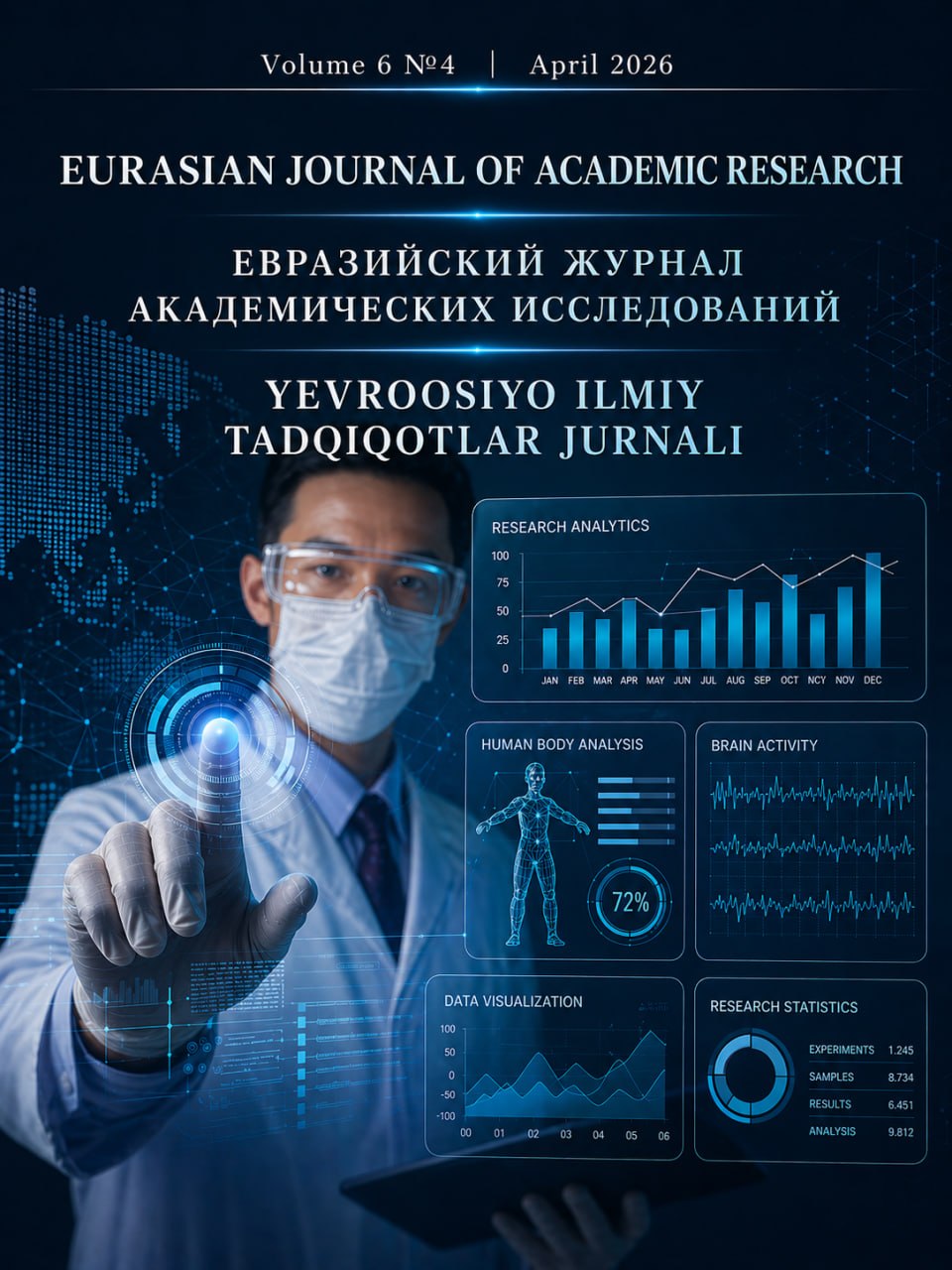
Eurasian Journal of Academic Research is an international scholarly journal dedicated to the advancement of science, innovation, and contemporary research. The journal aims to foster academic collaboration across the Eurasian region and beyond, providing a platform for the dissemination of cutting-edge research findings to the global scientific community.
The journal covers a broad range of disciplines, including natural sciences, social sciences and humanities, engineering and technology, economics and management, education, information technology, and other emerging fields of research. It focuses on publishing high-quality, original, and impactful research articles.
The editorial board comprises distinguished international scholars and experts. All submitted manuscripts undergo a rigorous double-blind peer review process to ensure the highest standards of academic integrity and quality.
The primary mission of the journal is to promote the exchange of scientific knowledge, support early-career researchers, and contribute to the development of innovative ideas within the global academic ecosystem.
Indexing & discovery
Every article receives a DOI and is distributed to open scholarly infrastructure for maximum discoverability.
Policies & guidelines
Editorial Board
Editors and reviewers with relevant scholarly qualifications.
Peer Review
How submissions are screened, reviewed and accepted.
Publication Ethics
COPE-aligned standards for authors, reviewers and editors.
Open Access
All articles are free to read under CC BY 4.0.
Author Guidelines
Manuscript template, structure and submission checklist.
Author Fees
Transparent article processing charges.